


 NL
NL
 DE
DE
 EN
EN


Frequently asked questions
Will I lose my diesel if I have my diesel tank cleaned by you?
No, you will not lose your diesel with us. Next to your boat, we set up a filtration line. During the pumping out of your tank(s), the diesel is ultra-finely filtered and cleaned. The diesel is temporarily stored in barrels or IBC tanks that we provide during the cleaning process of the tanks. Only a small portion of your diesel is used to spray the tanks under pressure as part of the overall cleaning process. After cleaning the tanks, the quality of the diesel is enhanced with additives. This increases the cetane level and protects the diesel against bacterial growth.Can you also separate the (condensate) water from my diesel?
Yes, we also remove the free water from the diesel. For this, we have very large water separators that are part of our mobile filtration line. Additionally, we use diesel filters with a full water block. Even if you accidentally filled up with water, we can separate it from the good diesel. Therefore, the good diesel does not have to be lost. This significantly reduces disposal costs.Why are other providers cheaper?
Most providers only “flush” your tank. This often means that they blindly insert a hose into the fill opening or sensor opening without even knowing if it reaches the bottom of the tank. They then pump the diesel up and down a few times through a filter and claim that the tank is “cleaned.” However, in the best case, only the diesel is filtered or a very small part of the tank around the flushing hose is cleaned. Flushing may yield results in tanks of 60 liters, but above that, it is an absolute myth that a diesel tank can be cleaned by just flushing. Especially since tanks are often divided into compartments by baffles. Flushing is a completely uncontrollable process where the result is rarely verifiable and insufficient. See our blogHow do you differ then?
Dieseltank-Reiniging.nl always ensures that the tank(s) are visually completely inspectable from the inside and manually accessible. Real cleaning remains manual work. With a special vacuum cleaner, we suck the entire bottom clean, removing all loose sludge. Stubborn dirt on the bottom and walls is scraped off and brushed. The tank is then vacuumed again. Next, the tank is pressure washed with diesel (NEVER USE WATER OR STEAM!), brushed again, and vacuumed once more. Only as a final step, when the tank is already completely clean, is the tank rinsed again with diesel and an anti-bacterial biocide. Our process is therefore verifiable and visually demonstrable. This applies to the entire tank, even if it is divided by baffles. Dieseltank-reiniging.nl also provides a 100% visually demonstrable cleaning guarantee!But my tank(s) have no inspection/service hatches at all. How do you do this?
Dieseltank-reiniging.nl makes every part of the tank visually accessible and reachable for manual cleaning work. If there are no inspection/service hatches in your tank, we will create them on-site. We have our own concept that allows us to do this directly on-site. Our hatches can be placed in the tops of the tanks as well as on the side of a tank. In all circumstances, our service hatches are guaranteed to be leak-proof and odor-free. The hatches can be installed in stainless steel tanks, steel tanks, aluminum tanks, and plastic tanks. If a tank is divided into multiple compartments by baffles, we will create a separate service hatch in each compartment. This way, all parts of the tank will always be easily accessible for maintenance work in the future. A one-time investment with absolute added value for the entire boat.Does it save costs if I pump the tank mostly empty myself?
Pumping your tank mostly empty beforehand usually does not have a favorable effect on the labor intensity of the cleaning. There is a chance that dirt on the walls and bottom of the tank will dry out, cake, and harden. This makes cleaning only more difficult. Therefore, pumping the tank beforehand does not lead to cost savings. Quite the opposite...Do you also dispose of the waste that comes out of the tank?
Unfortunately not. If we have to process a waste stream, there is a lot involved. Every incoming and outgoing liter must be documented. We have to store it somewhere and periodically have it picked up by certified companies. We then face environmental inspections and various extra measures that we must take. All in all, this significantly increases costs. Costs that we would have to pass on to the customer. Therefore, we leave the waste in a few sturdy jerrycans with you. We provide the jerrycans. You can then dispose of them for free at your local recycling center as a private individual.Does the boat need to be on land?
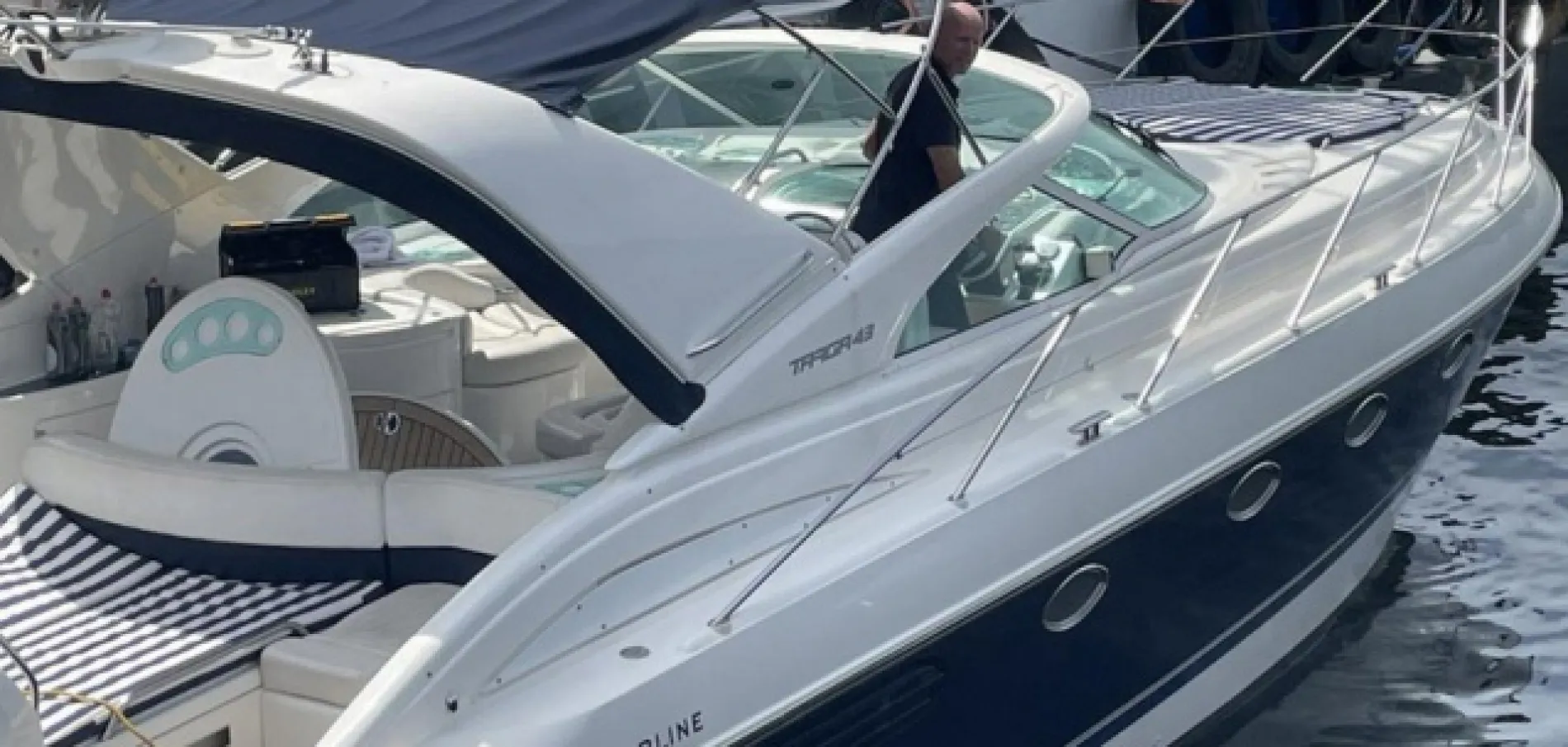
When it comes to cleaning diesel tanks of a boat, this can be done both on land and in the water. If the boat is in the water, it is best moored at a quay where we can park our van next to it. If that is not possible, it can also be done at a dock. The dock must be wide enough to accommodate all our equipment. The following conditions apply in the water:Position of the boat if in the water: The boat must be moored sideways to the quay or main dock, or in a box with the rear towards the main dock. In all cases: The boat must be located no more than approximately 75 meters walking distance from where we can park our van. This is due to the heavy (heavy) equipment we need to bring to the boat.