


 NL
NL
 DE
DE
 EN
EN



Top 3 most common types of diesel tank contamination
Clean filters and clear-looking diesel but still downtime due to a contaminated tank. How you can be misled.
"My diesel is still clean and there’s nothing visible in my water separator.
I don’t need to clean my diesel tank at all…"
This is a statement we often hear when we are at a marina, and people who own a boat come over out of curiosity to ask what we are doing. It’s quite logical, of course, that people look at how the diesel in the water separator or diesel filter looks, and use that as an indication of the "apparent" state of the diesel tank flora. However, the truth is often much more deceptive. We try to clarify this:
Different types of diesel tank contamination
When talking about a contaminated diesel tank, people automatically associate this with the now well-known diesel bacteria. However, we distinguish between different types of contamination. We will discuss the three most common ones and explain how you can be misled.
1) Diesel bacteria:
You can fill up with the cleanest diesel, but over the years, a certain amount of condensation always forms in your tank. After all, a tank is always in contact with outside air; otherwise, it creates a vacuum. Condensation in the tank means moisture in the tank, and moisture in the tank is a breeding ground for diesel bacteria. Moreover, almost all of us have been filling up with biodiesel for many years, which attracts and retains moisture. The bacteria grow in colonies in the tank. Just because it is not immediately visible in the water separator or that the diesel still looks clean does not mean everything is fine.
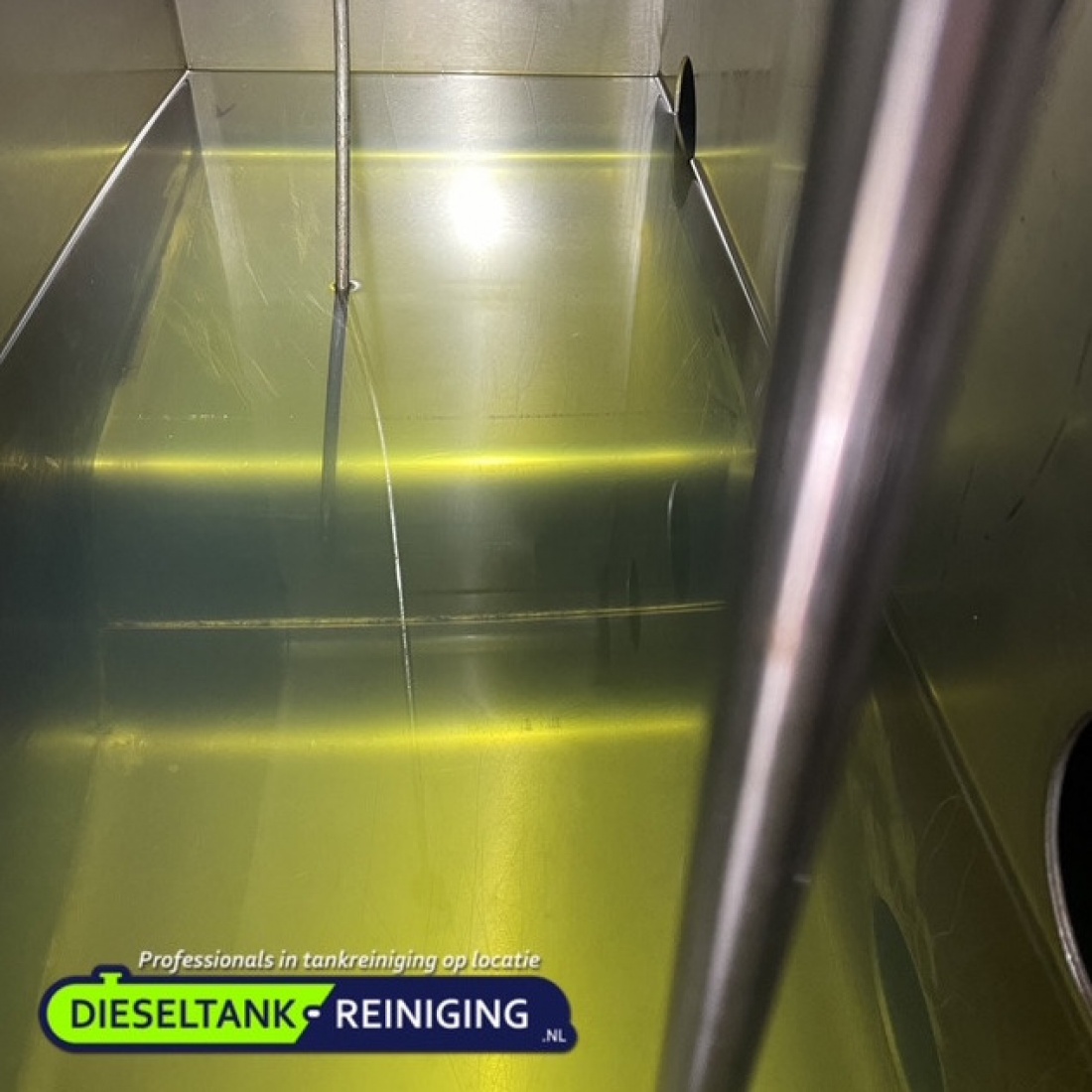
The photos below, which we took during a project, show perfectly clean transparent diesel. But within it are colonies of bacteria. As long as the clean diesel is being drawn in, you won’t notice anything, see nothing, and everything seems clean.
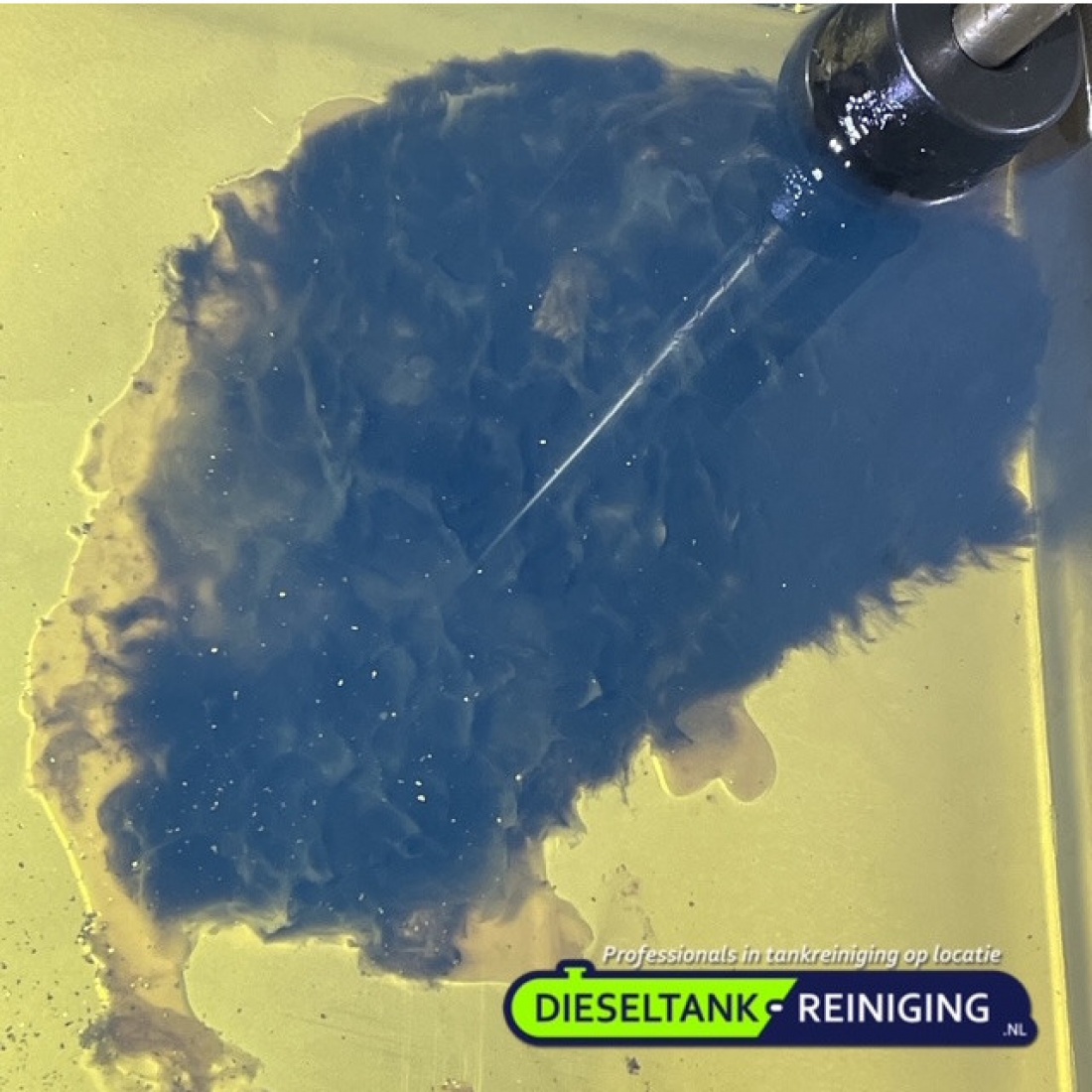
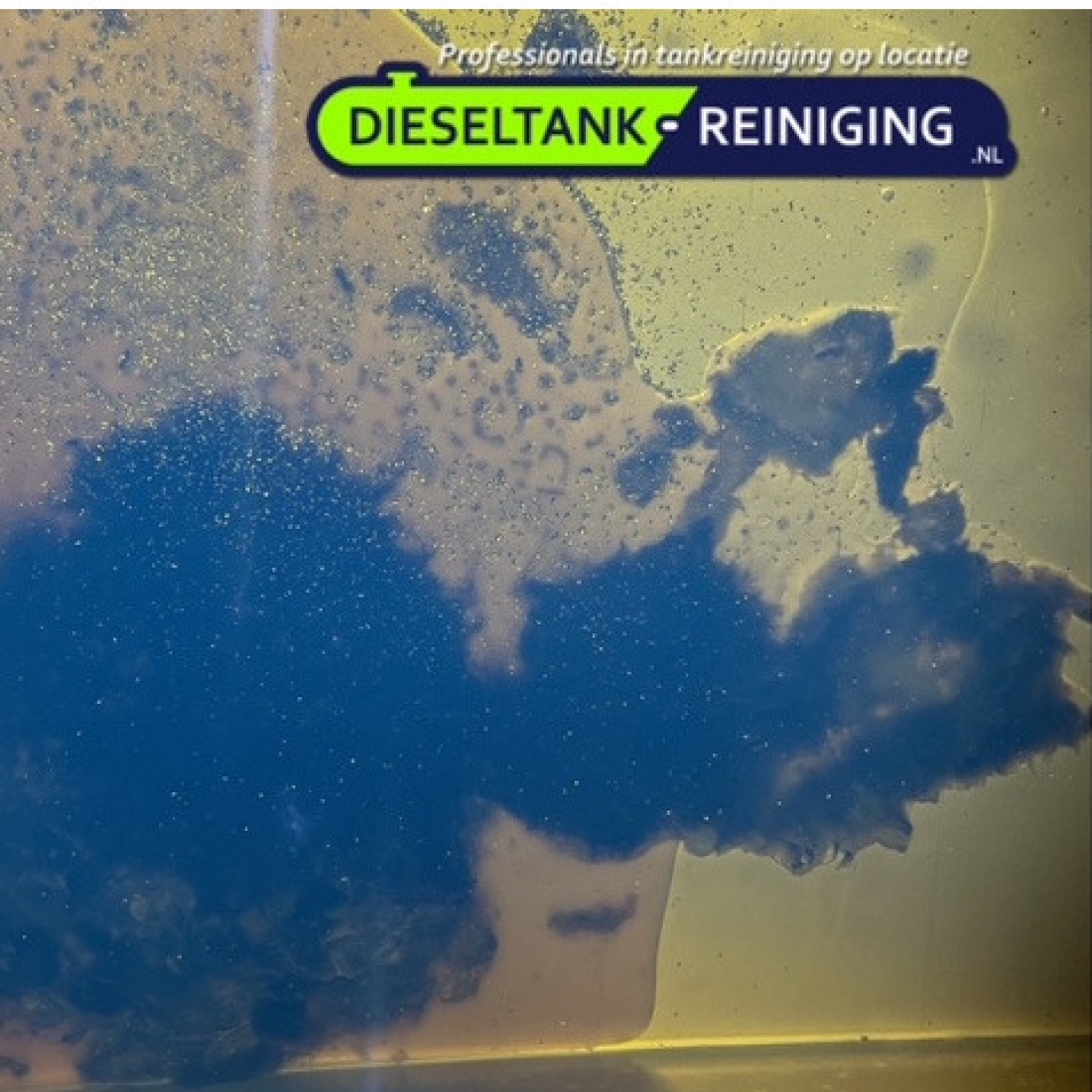
However, if such a colony lies in front of the suction pipe in the tank due to movement (waves), it often doesn’t even reach the filter or water separator but clogs the suction pipe already in the tank. The boat then fails without anything being visible in the diesel, water separator, or filter. One can quickly be misled. But even if it does reach the first filter (often a water separator), it is not always visible. Above the visible, often glass transparent, pot of the water separator is another filter element. The glass pot may still look clean, but the filter is full. Even then, the boat suddenly fails.
2) Gumming (biofats).
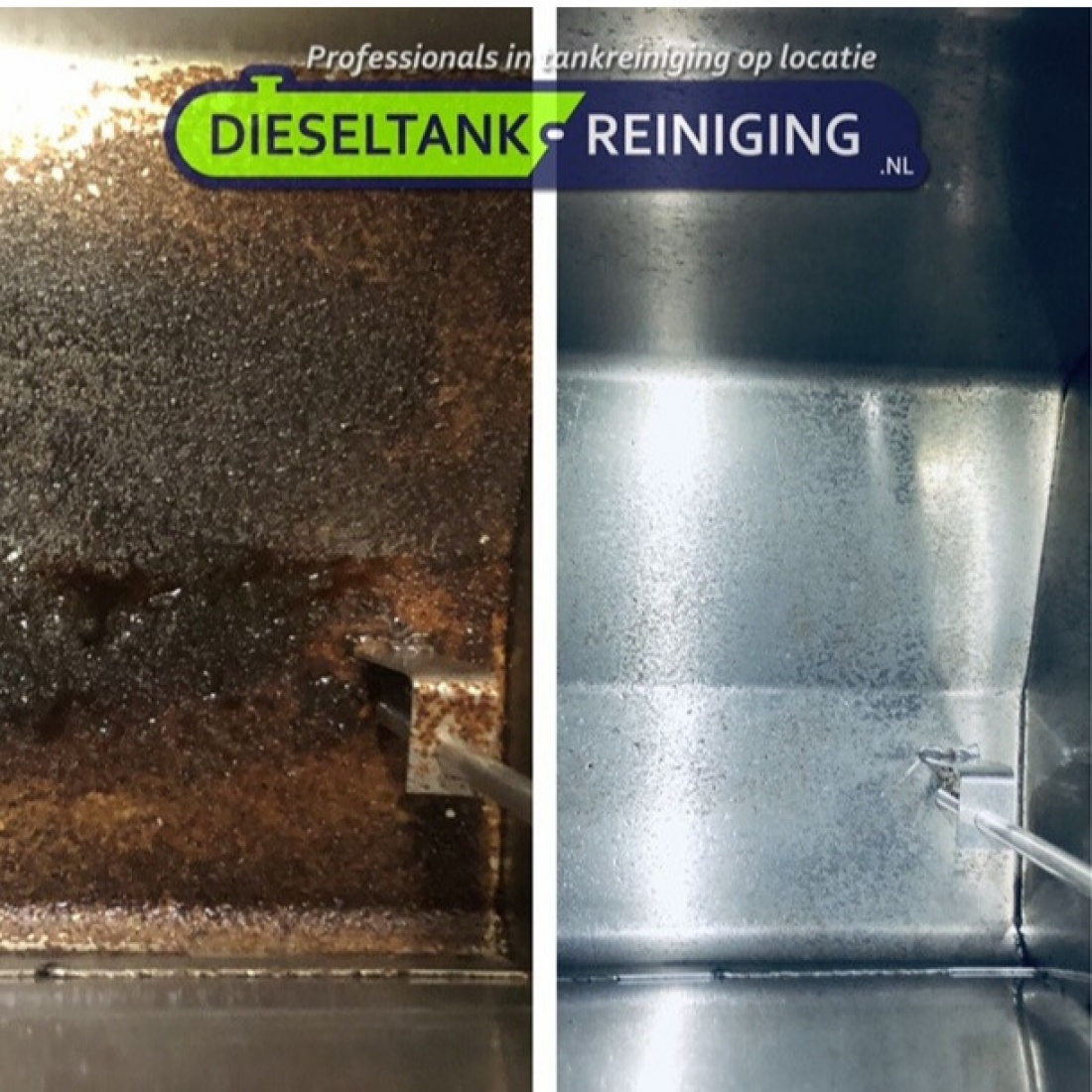
Biodiesel contains added vegetable and animal oils and fats. These begin to separate after a few months of inactivity (storage period). These fats then settle and form a layer (structurally similar to apple syrup) at the bottom of the tank. This is extremely sticky and very tough. For a long time, one does not experience any problems because it does not quickly float through the tank. But once it is absorbed into the diesel system, the problems are significant. Fuel pump, injectors, etc… everything gets clogged.
Major expensive repairs are the result. The gumming must really be scraped out with a putty knife and cannot be rinsed out. The danger is that in warm weather or due to engine heat, the gumming becomes more fluid and later solidifies in the wrong places again. Diesel will still be crystal clear, and nothing will be visible in the water separator. Here too, one can be greatly misled by clean-looking diesel or filter pot.
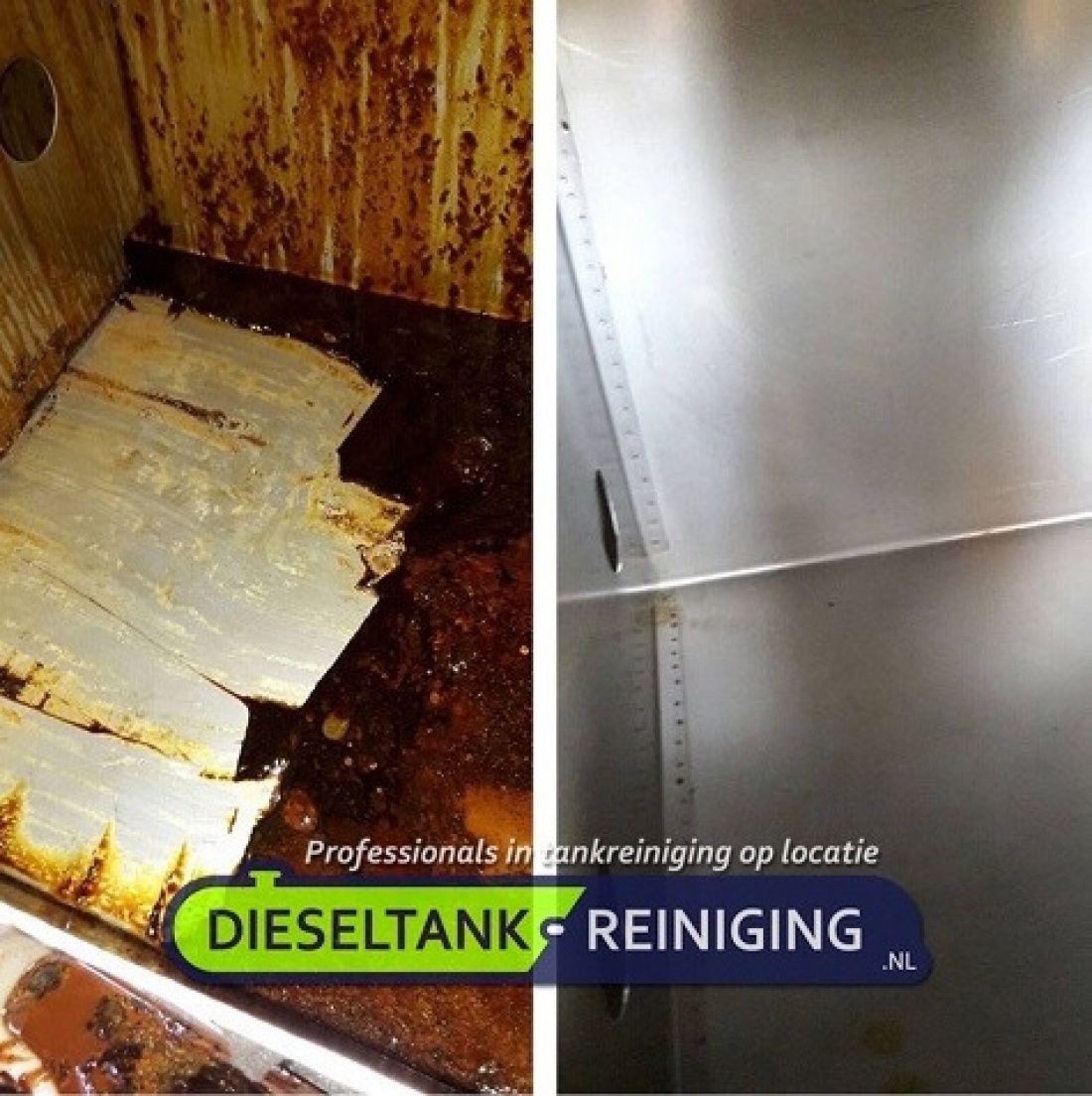
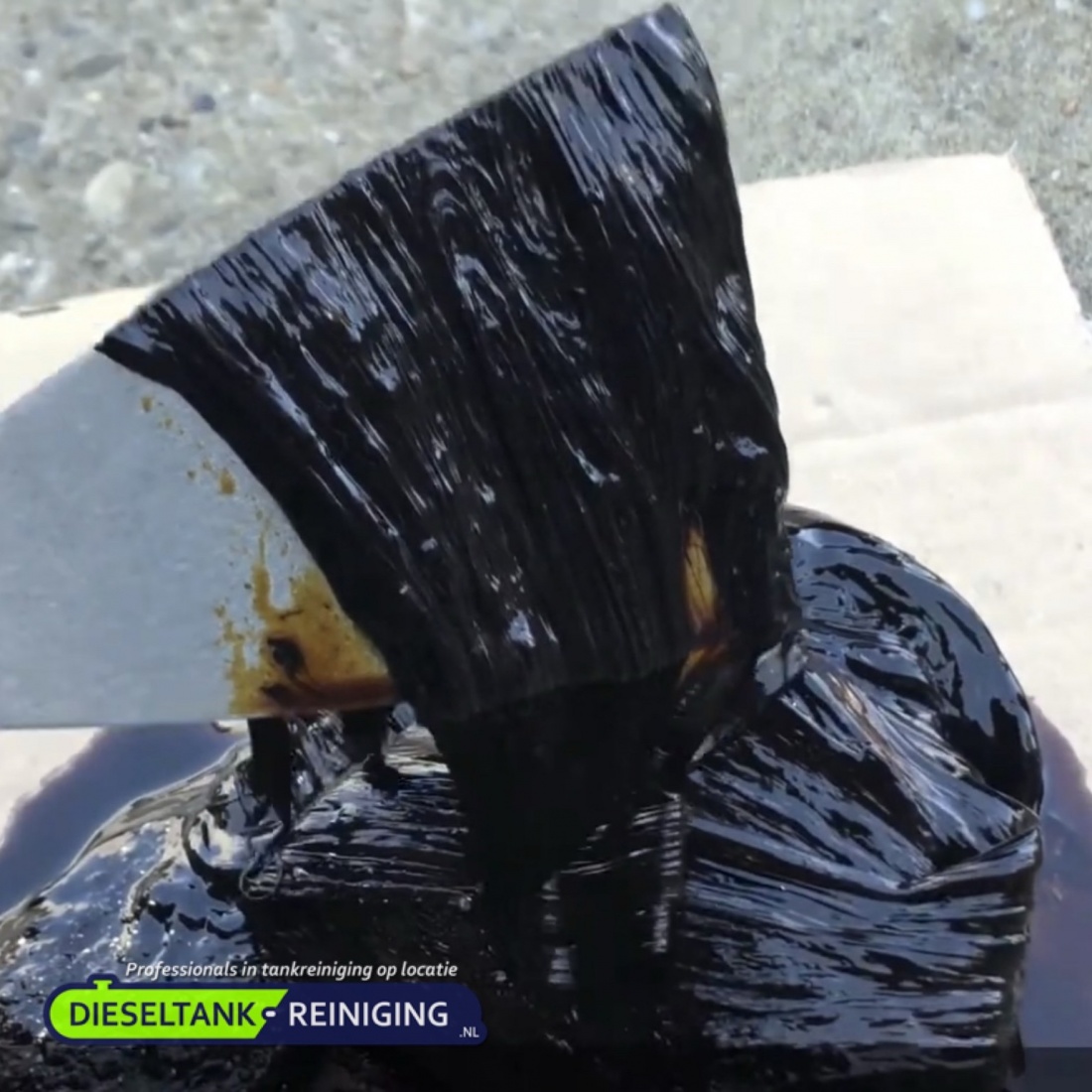
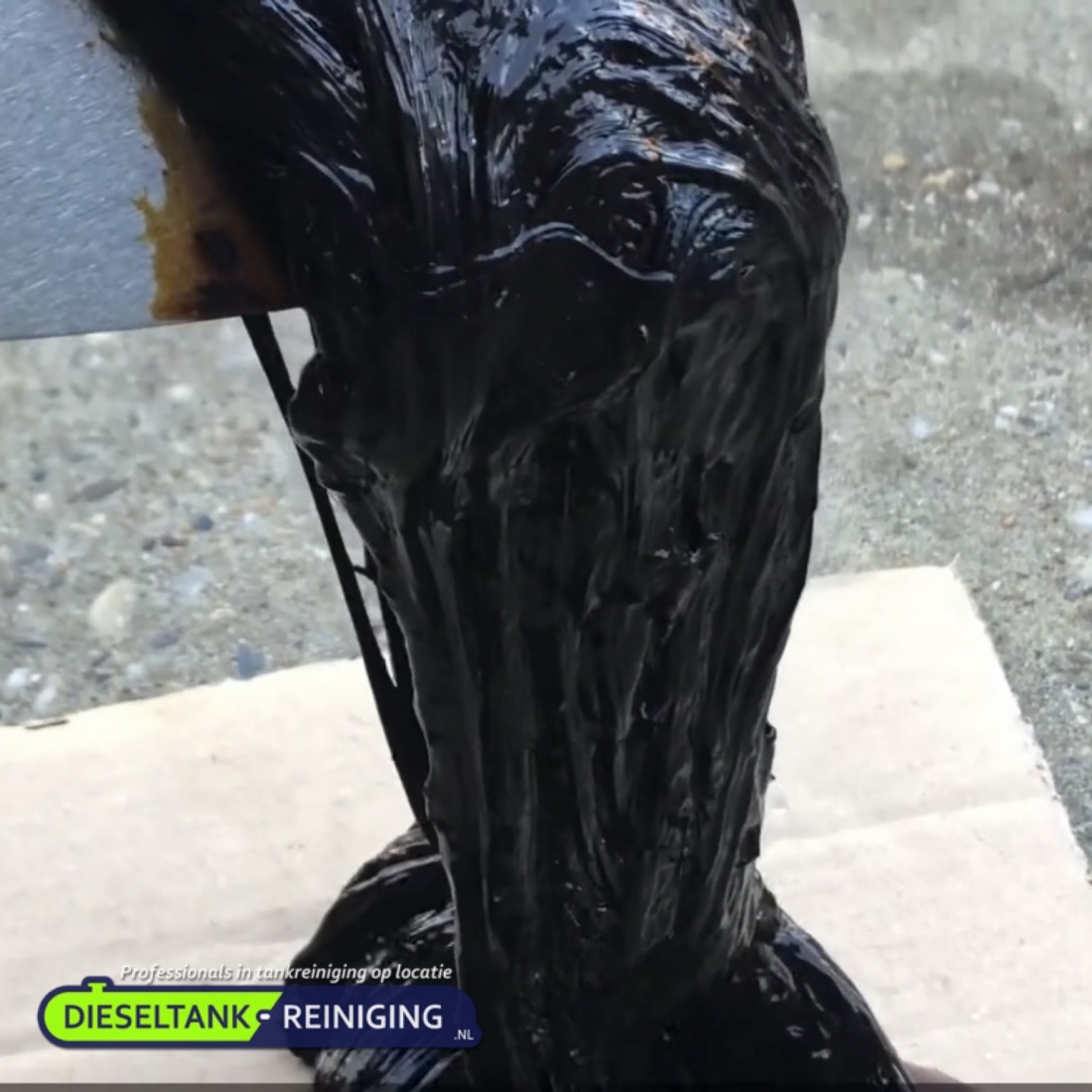
Also check out our video below. This is gumming that we removed from two tanks of 250 liters each.
3) Sediment due to age or dead bacteria.
If diesel is not consumed quickly enough and gets old, molecules start to clump together. It settles as dirt at the bottom. This eventually forms a layer of sludge. Even with the use of biocide additives, a layer of sludge will form. The diesel bacteria may die, but the dead bacteria remain in the tank. The misconception is that an anti-bacterial additive also cleans a tank and dissolves the bacteria into nothing. This is certainly not the case. The dead bacteria settle to the bottom and form a thick layer of sludge, while the diesel above remains clean and clear. The suction pipe of a tank is often a centimeter or so above the bottom of the tank and will not immediately suck up the sludge at the bottom. For a long time, there will be nothing visible in the diesel or in the filters… until the moment the layer has built up high enough. Then it only takes a wave to stir the sludge a bit, and the diesel system sucks up a large gulp of sludge. Again, you will suddenly find yourself out of action.
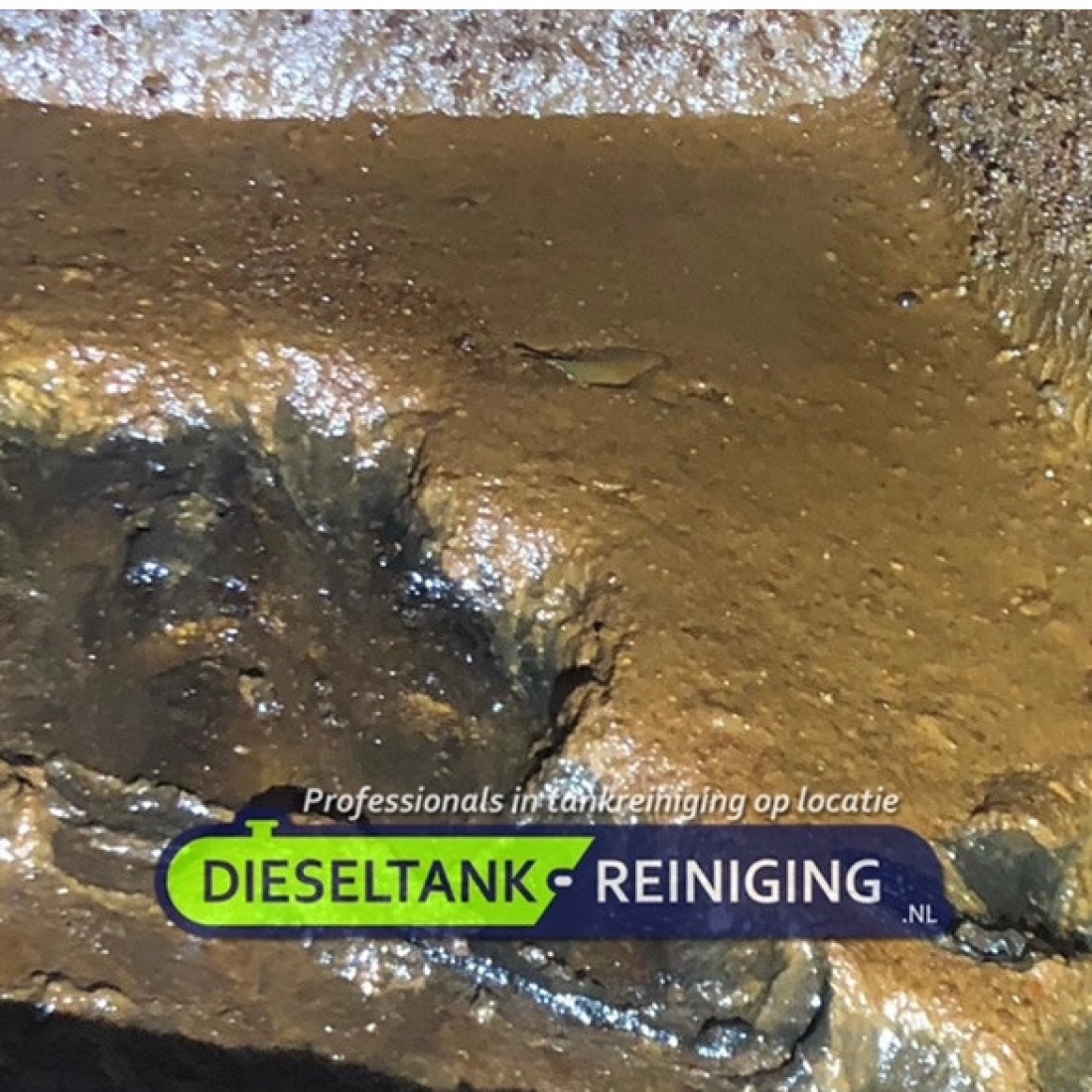
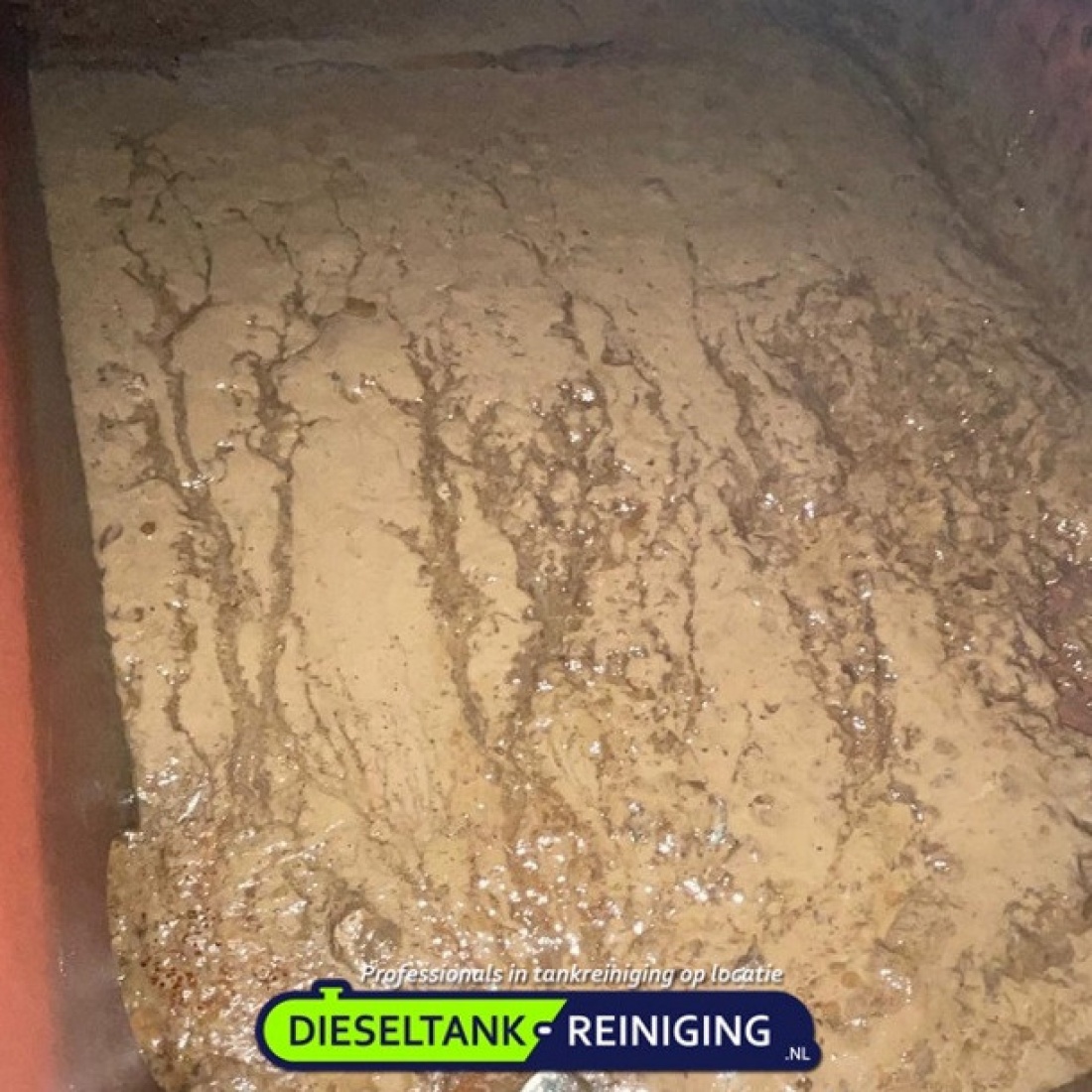
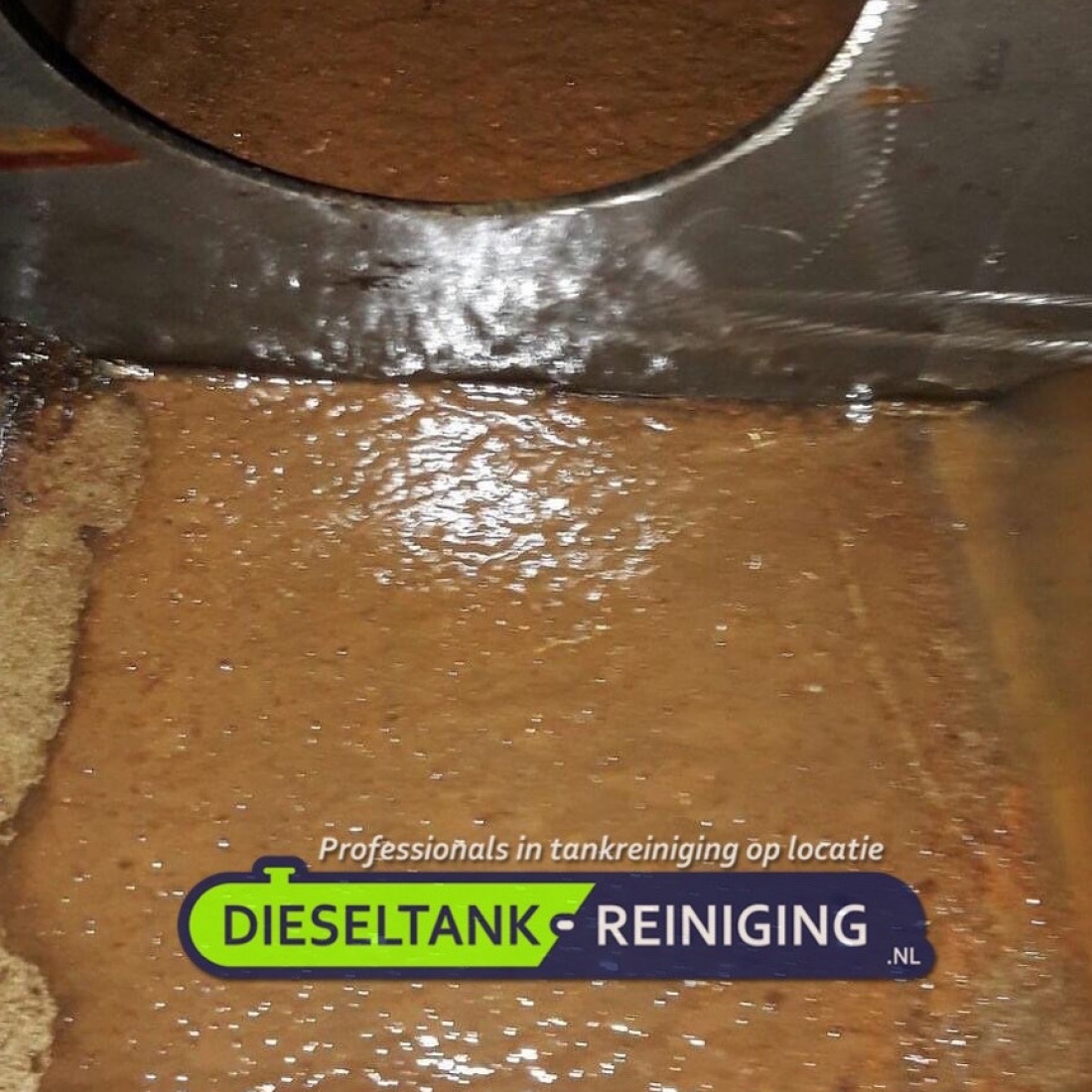
It is no coincidence that downtime due to a contaminated diesel tank often comes unexpectedly. And preferably right in the shipping lane with approaching inland vessels. Both Botenwacht and the KNRM confirm that 70% of unexpected failures they deal with annually can be traced back to a contaminated tank. Often, people postpone cleaning the diesel tank for too long. They would rather lay new flooring or have the cushions reupholstered. Understandable. After all, that is what the eye sees. People also postpone tank cleaning because there are no signals of contamination yet… However, we have now explained that this does not mean that contamination is not present… Waiting until the signals have already manifested often means that it is already too late.
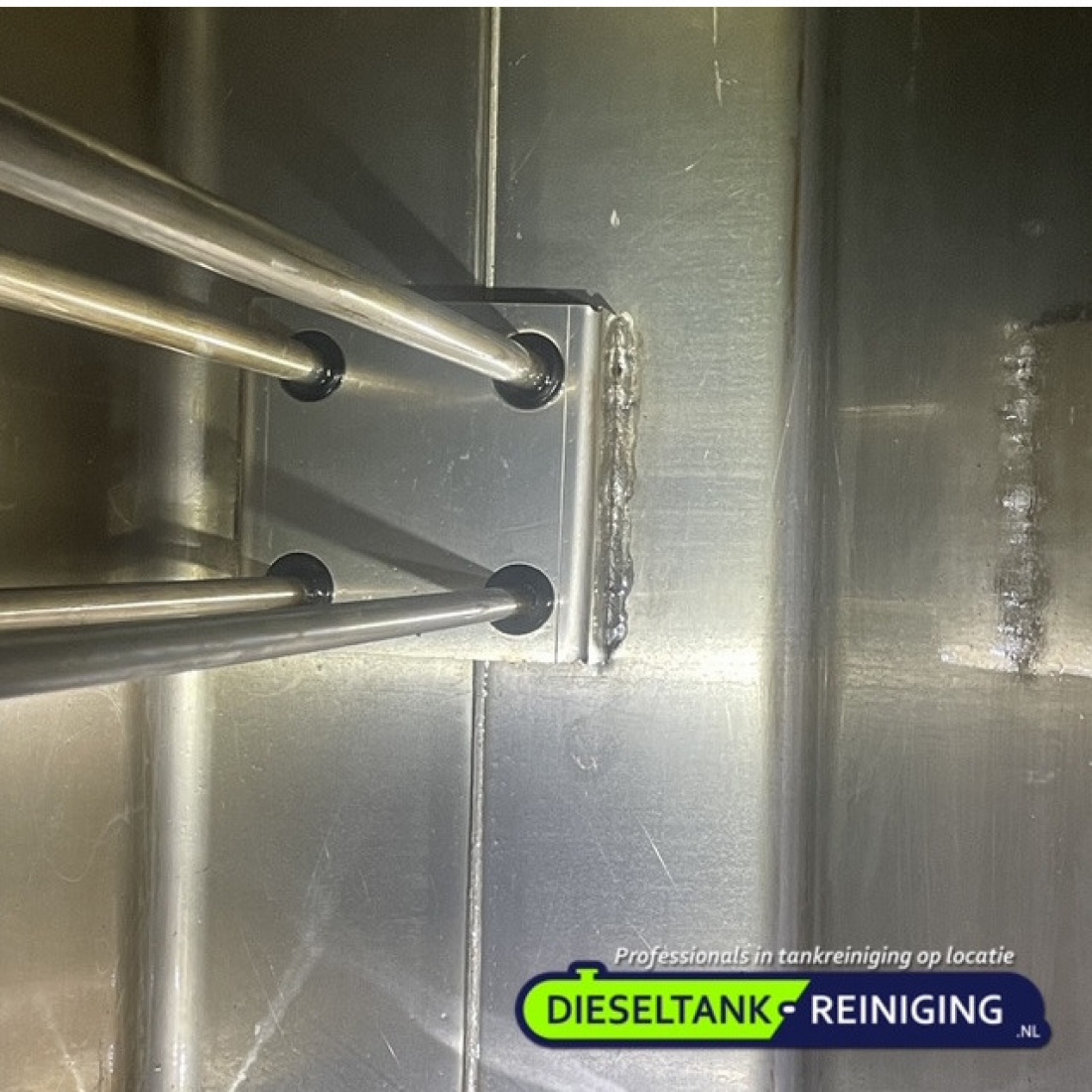
Preventive and periodic maintenance of your diesel tank is just as important as preventive and periodic maintenance for your engine. This is also done preventively to prevent problems. The same actually applies to the diesel tank. The diesel tank is the source of your engine. That must be in order. Better cleaned a bit too early than a day too late…